
You sent the text 20 minutes ago.
They haven't replied.
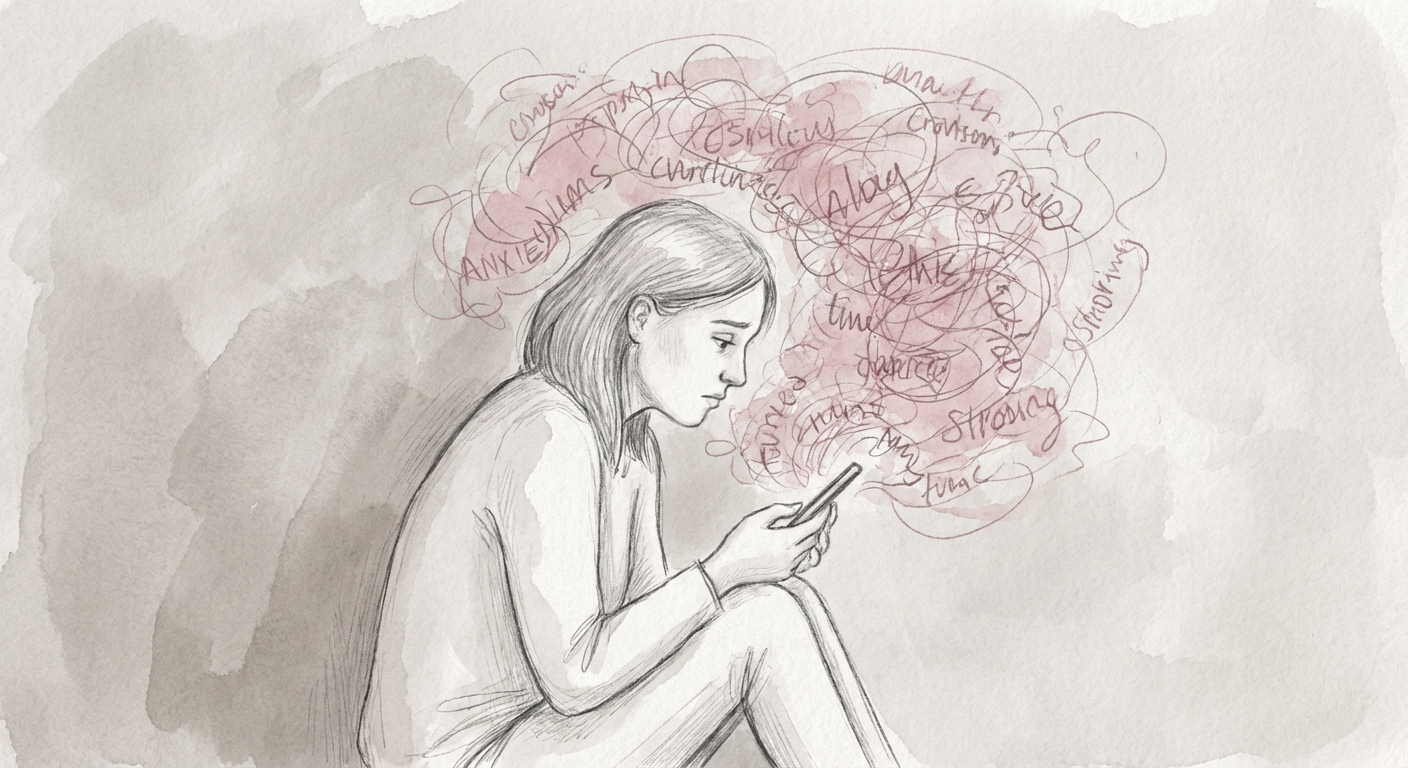
Your logical brain knows they are busy. They are at work. They are driving.
But your body?
Your body is screaming.
Chest tight. Stomach churning. A familiar, cold dread washing over you.
“They’re leaving. I’m too much. I’ve ruined it again.”
If this sounds like your daily reality, welcome. You are not "crazy," and you are certainly not "broken."
Therapist’s Note:
In my practice, I often sit with high-functioning, incredibly smart clients who feel completely hijacked by these moments. They come to me asking, "How do I fix this?"My answer is always the same: We don't fix you. Because you aren't broken.
This is your ultimate guide to understanding—and healing—anxious attachment. Not by fighting it, but by befriending it.
The Biology of Longing: It’s Not "Clinginess," It’s Survival
Before we change anything, we must understand the machinery.
When you search "how to fix anxious attachment style," you often find advice about being more independent or getting a hobby.
But that advice fails because it ignores the biology.
Anxious attachment is not a personality flaw. It is a sensitized nervous system.
According to attachment theory and modern neuroscience, your brain is wired to treat "connection" as "survival." When that connection feels threatened (even by an unanswered text), your amygdala hits the panic button.
You enter "Fight or Flight" mode.
- Fight: Double texting, calling repeatedly, demanding reassurance.
- Flight: frantically scrolling social media to distract yourself.
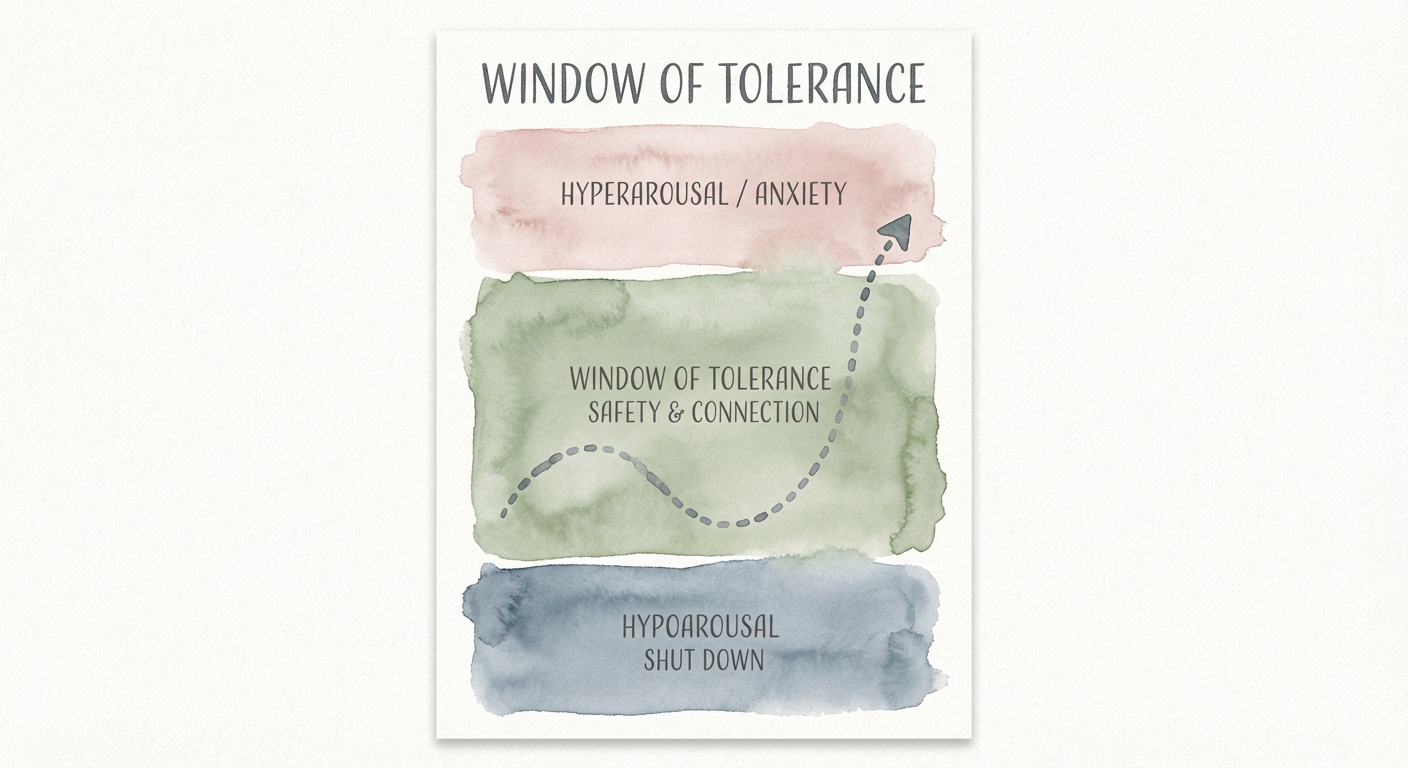
You aren't "needy." You are biologically terrified.
And you cannot think your way out of biological terror. You have to feel your way out.
Step 1: Regulate Your Nervous System (Before You Send That Text)
This is the most critical step.
Most people try to solve relationship problems while their nervous system is on fire.
Stop.
Do not send the text. Do not ask for reassurance yet.
First, we must tell your body that you are safe.
The "Somatic Pause" Protocol
When the panic hits, use these tools to engage your Vagus Nerve (the brake pedal of your nervous system):
The Physiological Sigh
- Inhale deeply through your nose.
- Take a second, shorter inhale on top of it to fully inflate the lungs.
- Exhale slowly through your mouth (twice as long as the inhale).
- Repeat 3 times.
Cold Water Shock
- Splash ice-cold water on your face. This triggers the "Mammalian Dive Reflex," instantly lowering your heart rate.
Gravity Grounding
- Sit down. Feel your feet on the floor.
- Push your heels into the ground.
- Say out loud: "I am in this room. I am safe right now."
Therapist’s Note:
Clients often tell me, "This feels too simple." But simple is what your brain needs when it's offline. We are trying to bring your Prefrontal Cortex (the rational brain) back online.
[Visual Prompt: An illustration of a figure with hands gently placed over their heart center (chest). The figure is outlined in Slate Blue against a Warm Grey background. Soft, rippling lines radiate from the chest, symbolizing a slowing heart rate.]
Step 2: Decode Your "Protest Behavior"
Once your heart rate is down, we can look at the behavior.
In attachment theory, the things we do when we feel disconnected—calling too much, acting cold, picking fights—are called "Protest Behaviors."
They are a protest against disconnection.
But they usually push our partners further away.
We need to shift from Reacting to Reflecting.
The Iceberg of Needs
Imagine your anxiety is an iceberg.
- Above the water (What you show): Anger, silence, nagging, "You never listen to me!"
- Below the water (What you feel): Fear of abandonment, loneliness, "Do I matter to you?"
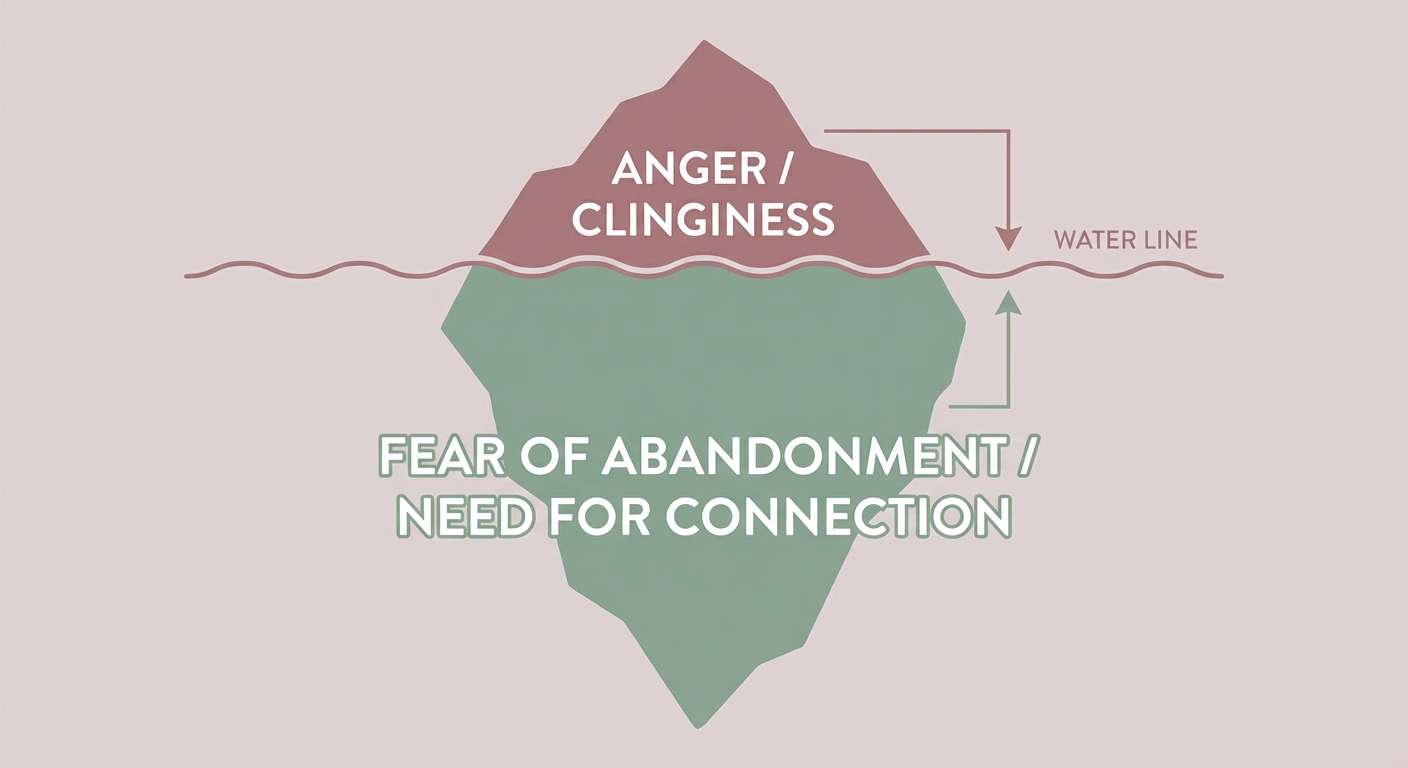
The Shift:
Instead of acting out the top of the iceberg, we learn to speak from the bottom.
| Instead of (Protest Behavior) | Try This (Vulnerable Truth) |
|---|---|
| Sending 5 texts in a row ("Where are you??") | "I'm feeling a wave of anxiety right now. Just need to self-soothe." |
| Giving the silent treatment | "I'm feeling overwhelmed and need 20 minutes to calm down so I can talk nicely." |
| Saying "You don't care about me!" | "I'm feeling lonely and I really miss connecting with you." |
Step 3: Communicate Your Needs (The Secure Script)
This is the hardest part for my anxious clients.
You are afraid that if you show your needs, you will drive them away.
Paradoxically, stating your needs clearly is exactly what creates safety.
Here are "Secure Scripts" you can copy and paste (adjust to your voice):
Scenario A: They are distant / slow to reply
- The Anxious urge: "Why are you ignoring me?"
- The Secure Script: "Hey! I’ve noticed we haven't chatted as much lately and my brain is making up stories about it. Just wanted to check in and see how you’re doing. Can we catch up tonight?"
Scenario B: You need reassurance
- The Anxious urge: (Fishing for compliments) "Do you even like me?"
- The Secure Script: "I’m having a low-confidence day and feeling a bit vulnerable. I could really use some reassurance or a hug right now."
Therapist’s Note:
Notice how these scripts own the feeling ("My brain is making up stories," "I am feeling vulnerable"). They don't blame the partner. This invites them in to help you, rather than putting them on the defensive.
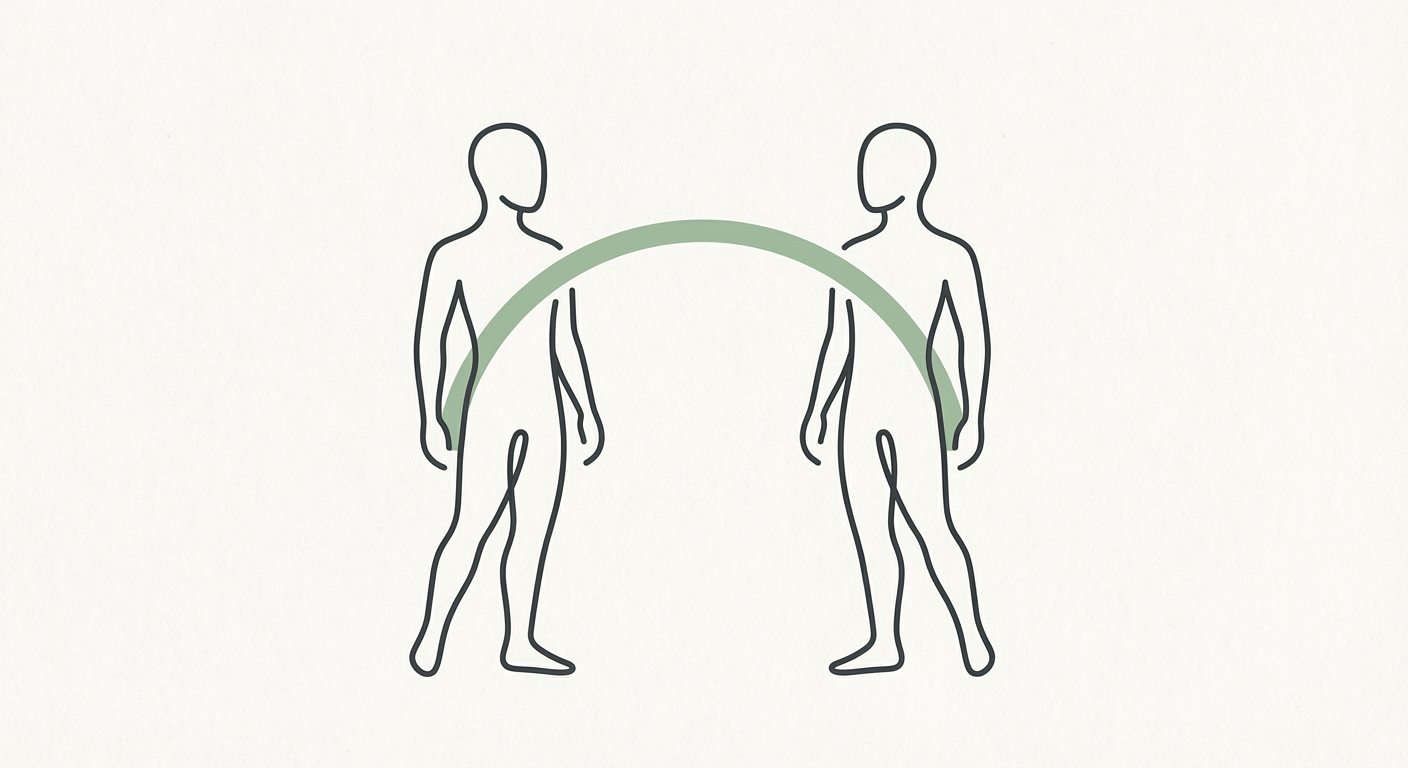
From Anxious to "Earned Secure"
You might have been born with a sensitive system, or learned anxiety from your childhood environment.
But your attachment style is not a life sentence.
Neuroplasticity is real. You can rewire your brain.
We call this becoming "Earned Secure."
It doesn't mean you will never feel anxious again.
It means:
- You recognize the anxiety when it starts.
- You regulate your body before you act.
- You communicate your truth, not your trauma.
Be patient with yourself. You are reparenting the scared child inside you. And that child deserves kindness, not "fixing."