
Have you ever felt a sudden, icy "click" in your chest when someone gets too close?
One moment, the connection is beautiful. The next, you are nitpicking their flaws or feeling a desperate, suffocating need to bolt for the exit.
In the world of psychology, we call this Avoidant Attachment. But in my practice, I prefer to call it the Heroic Protector.
Therapist’s Note
In my consulting room, clients often feel deep shame about their "emotional unavailability."
I always tell them: Your avoidance isn't a flaw. It’s a survival skill that worked when you were a child. You learned that relying on others was dangerous, so you built a wall to stay safe.
Today, we aren't tearing that wall down with a sledgehammer. We are simply learning how to build a door.
The Deactivation Switch: How the Mind Pulls Away
Healing begins by recognizing your "Deactivation Strategies." These are the subtle ways your brain convinces you that independence is the only way to survive.
Common deactivation triggers include:
- The Flaw Finder: Suddenly becoming obsessed with a partner's minor physical or personality quirks.
- The Ghosting Urge: Feeling a massive surge of energy to "disappear" after a deep or vulnerable conversation.
- The Future Block: Refusing to plan even a week ahead because it feels like a "trap."
- The Phantom Ex: Idealizing a past partner to avoid being present with the current one.
Self-Check: Is Your "Internal Bodyguard" in Overdrive?
Take a moment to scan your recent relational patterns. This isn't about judgment; it’s about data.
| Symptom | Frequency (Never/Often) | Your Personal "Trigger" |
|---|---|---|
| Feeling "smothered" by normal affection | ||
| Withdrawing when things are going well | ||
| Keeping secrets to maintain a sense of "freedom" | ||
| Prioritizing hobbies/work over emotional intimacy |
Pillar 1: Somatic Softening (The Body First)
You cannot "think" your way out of avoidant attachment. Avoidance lives in the nervous system. When you feel the urge to pull away, your body is in a state of "High Alert."

Steps to Calm the "Bolt" Reflex:
- Acknowledge the Sensation: Notice the tightness in your throat or the coldness in your limbs.
- Name the Bodyguard: Say to yourself, "My protector is trying to keep me safe right now because this feels like a lot."
- The 5-5-5 Rule: Inhale for 5, hold for 5, exhale for 5. This signals to your brain that you are not being hunted.
Pillar 2: The 1% Vulnerability Rule
The biggest mistake avoidant individuals make is trying to be "all-in" too fast. This leads to "flooding," which triggers a massive withdrawal.
Instead, practice Micro-Vulnerability. Share only 1% more than you usually would.
| The Old Script (Avoidance) | The New Script (Secure-ish) | Why it Works |
|---|---|---|
| "I'm just busy." | "I’m feeling a bit overwhelmed and need 20 minutes of alone time." | It honors your need for space without abandoning the partner. |
| "It’s fine." | "Actually, that comment made me feel a little bit defensive." | It’s a small "bridge" of truth. |
| (Silent withdrawal) | "I’m noticing I’m starting to pull away. Can we talk later tonight?" | It prevents the partner from chasing you. |
Pillar 3: Reclaiming the Narrative
Your brain likely tells you a story: "If they really knew me, they’d control me" or "Connection equals the loss of self."
Healing requires rewriting this script.
Therapist’s Note
One of my clients once told me, "I feel like a bird being asked to live in a cage."
We worked on reframing. We realized that a healthy relationship isn't a cage; it’s a landing strip. You can still fly, but you finally have a safe place to come home to.
Bridges, Not Moats: Redefining Boundaries
For an avoidant person, a boundary usually looks like a moat—it keeps everyone out. For a secure person, a boundary is a bridge.
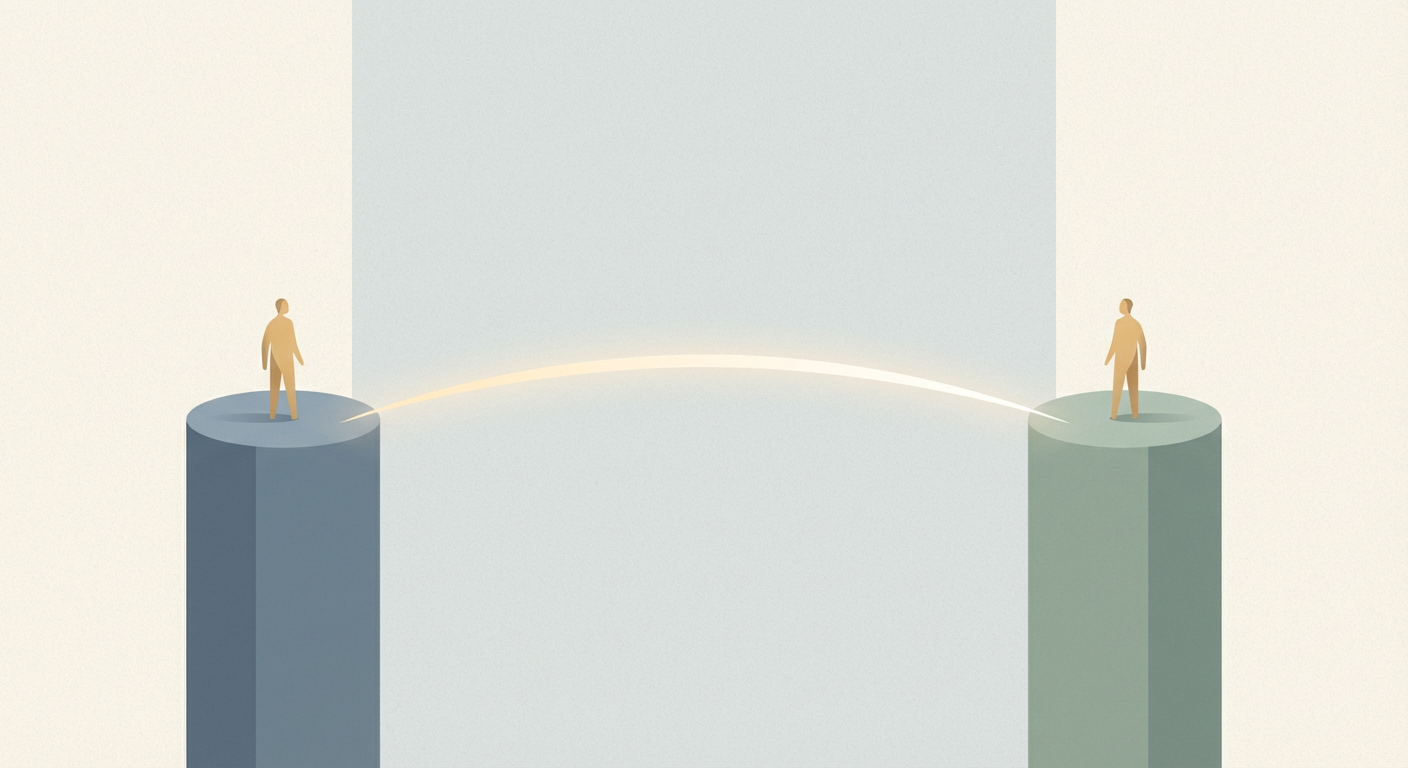
To heal, you must learn that asking for space is an act of intimacy, not a rejection.
- Step 1: Use "I" statements.
- Step 2: Provide a "Return Time" (e.g., "I need an hour, then I’ll be back to finish this chat").
- Step 3: Stick to the return time to build trust in yourself and the relationship.
The Long Game: What "Earned Security" Feels Like
Healing isn't about becoming a different person. It’s about becoming a person who can stay in the room when things get heavy.
Signs you are healing:
- You notice the "Cold Click" happening, but you don't act on it immediately.
- You can ask for a hug even when you feel slightly annoyed.
- You realize that your partner's needs are not "demands" on your soul.
You spent years perfecting the art of the exit. Now, give yourself the grace to learn the art of the stay.
Would you like to explore a specific "Practice Script" for your next difficult conversation, or should we look at how to handle an Anxious partner while you heal?