It usually starts with a question whispered in the dark, often around 3:00 AM.
The house is quiet, but your mind is a cacophony. You are replaying a conversation from ten years ago. You are feeling the texture of the sheets against your skin like sandpaper. You are acutely aware of the ticking clock, the hum of the refrigerator, the weight of the world.
And the question forms: “Why is everything so loud for me? Can I just… stop feeling this much? Is there a way to turn it off?”
I have sat with countless clients who, with tears in their eyes, confess their secret wish: to be numb. To be “normal.” To be one of those people who can watch the news without weeping or walk through a crowded mall without needing a dark room for three hours afterward.
If you are asking, “Can a Highly Sensitive Person change?”, I owe you the truth. It is a nuanced truth, one that bridges the gap between the immutable laws of your biology and the boundless potential of your psychology.
Therapist’s Note
Let’s pause here. If you are reading this hoping for a cure, I want you to gently lower your shoulders. The desire to "change" often stems from a deep well of shame—a feeling that you are "too much" for this world.
In therapy, we call this the "Core Defect" schema. You aren't actually asking if you can change your biology; you are asking if you can stop suffering. And to that, the answer is a resounding yes.
The Hardware: Why You Were Built This Way
To understand if you can change, you must first understand what you are trying to dismantle.
High Sensitivity (Sensory Processing Sensitivity) is not a disorder. It is not a glitch in your matrix. It is a biological trait found in roughly 20% of the population—and over 100 other species, from fruit flies to primates.
The "Orchid vs. Dandelion" Theory
Imagine a dandelion. It is robust. It can grow in a crack in the sidewalk, indifferent to the soil quality, resilient to the wind. Most people are dandelions.
Now, imagine an orchid.
If you treat an orchid like a dandelion—leave it in harsh sun, ignore its soil pH—it will wither. It will look weak. But give the orchid the specific greenhouse environment it needs, and it will not just survive; it will bloom with a complexity and beauty that the dandelion can never achieve.
You are an orchid.
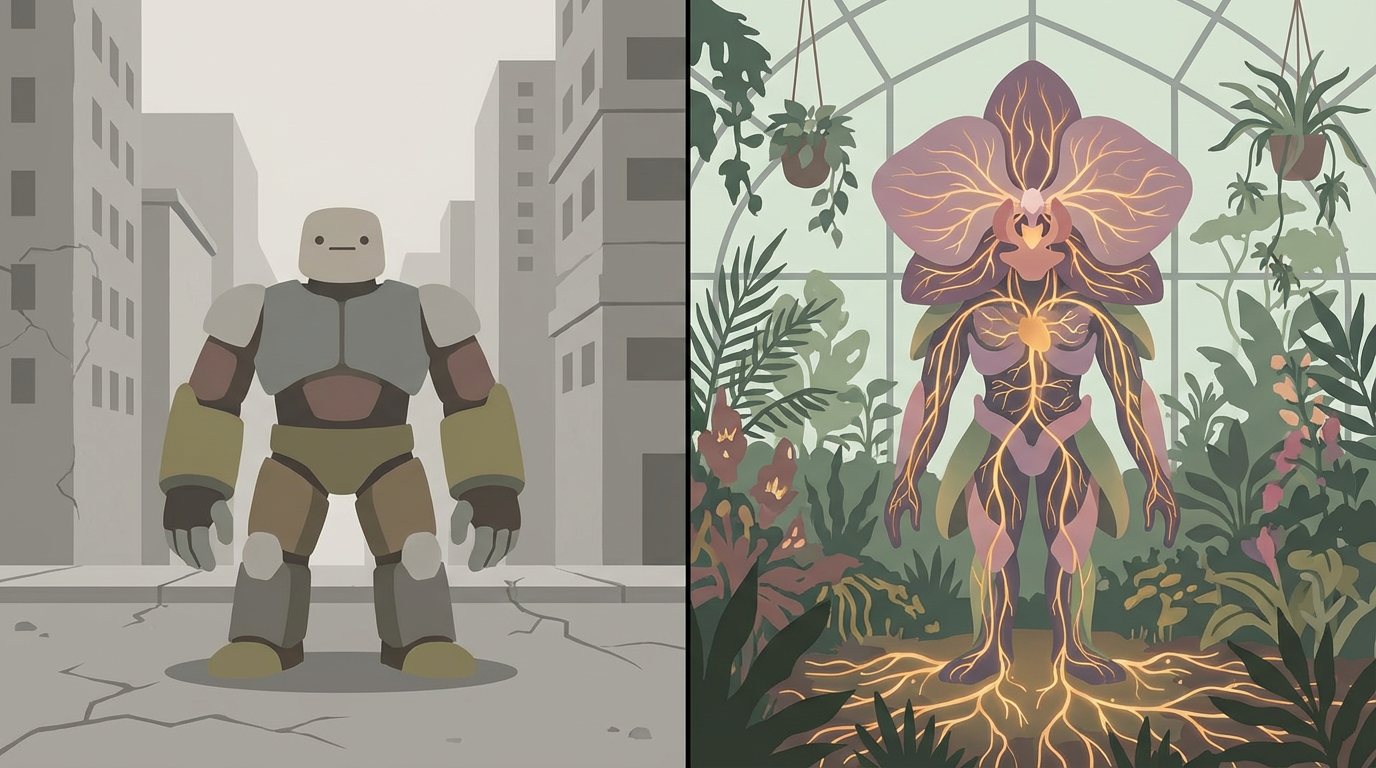
Your nervous system is designed to process information deeply. You don't just "see" a room; you absorb it. You read micro-expressions. You sense the shift in atmospheric pressure before the rain.
The Evolutionary Sentry
Why would evolution keep this trait if it makes us so anxious?
Because the tribe needed you. While the dandelions were sleeping by the fire, you were the Sentry. You heard the twig snap in the forest. You smelled the smoke before the fire started. You were the advisor to the King, the shaman, the healer.
So, can you change this hardware? No. You cannot lobotomize your gift. You cannot turn an orchid into a dandelion, and trust me, you wouldn’t want to.
But here lies a deeper truth: You don’t need to change the hardware to change the experience.
The Pivot: Neuroplasticity & The Window of Tolerance
If the hardware is fixed, the software is rewriteable.
This is where the magic of modern neuroscience enters the room. We used to believe the brain was static after childhood. We now know the brain is plastic—it is constantly rewiring itself based on experience.
Widening the Window
The problem isn't your sensitivity; it's your regulation.
Most HSPs live in a state of chronic "Hyper-arousal" (fight or flight). Everything feels like an emergency because your nervous system is stuck in the "ON" position.
- Hypo-arousal: Numbness, dissociation, depression.
- Hyper-arousal: Anxiety, panic, sensory flooding.
- The Window of Tolerance: The sweet spot in the middle where you are alert, engaged, and calm.
Can you change? Yes. You can change the width of your window.
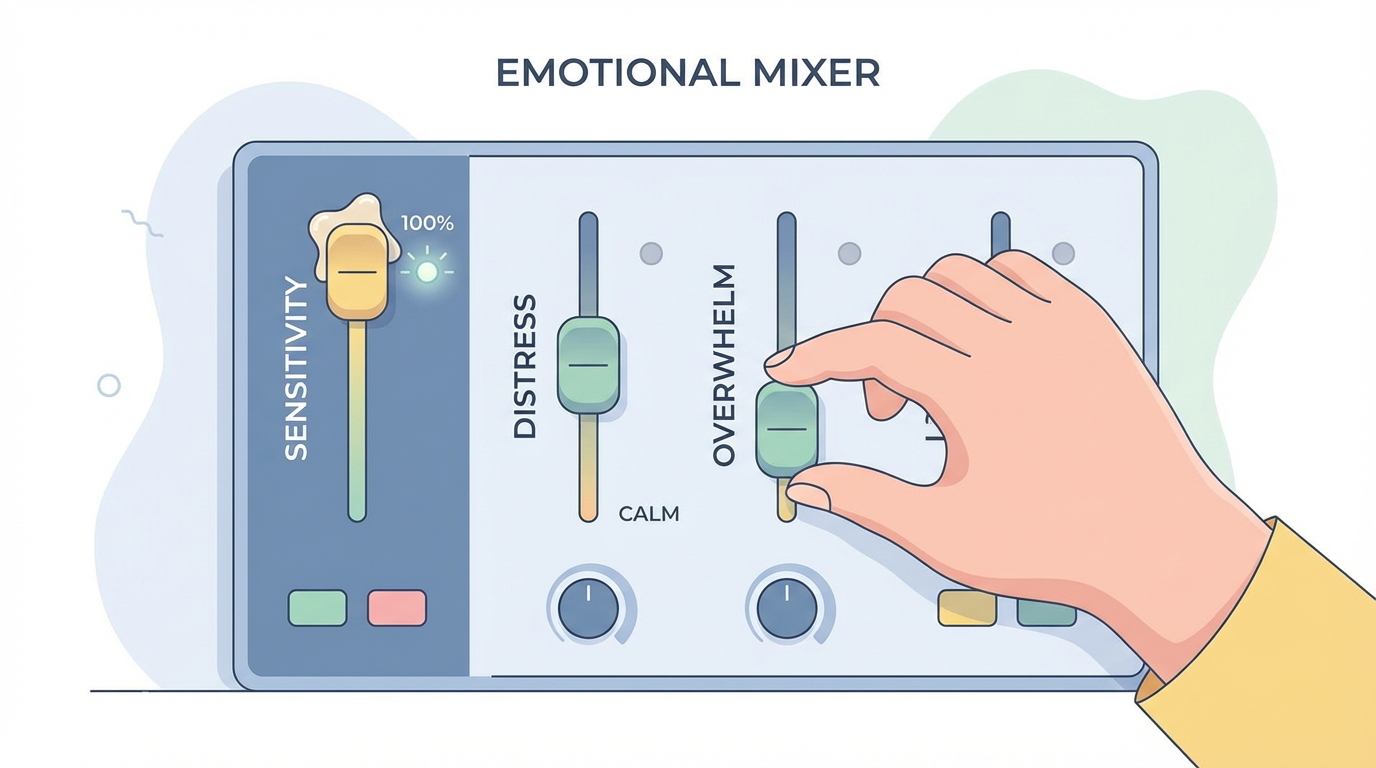
By training your nervous system, you can process the same amount of data (sensitivity) without the accompanying cortisol spike (overwhelm). You keep the high-definition picture, but you turn down the screeching volume.
The Protocol: 3 Steps to "Turn Down the Volume"
We do not "fix" you. We integrate you. Here is the protocol for moving from a fragile state to an antifragile one.
1. The Sensory Diet (Regulation)
You would not run a Ferrari on cheap gas. You cannot run a high-sensitivity nervous system on a standard lifestyle.
This requires a UX audit of your life:
- Visual Noise: Eliminate clutter. Your brain processes every object on your desk as a "task." Clear the space, clear the mind.
- Auditory Anchors: Invest in high-fidelity noise-canceling headphones. Create "silence pockets" in your day.
- Fabric & Texture: If a tag on a shirt bothers you, cut it off immediately. These small irritants are "background apps" draining your battery.
2. Cognitive Reframing (Interpretation)
HSPs often project their own depth onto others. When a friend sends a short text, you write a novel in your head about how they hate you.
The Reframes:
- “They are angry at me” → “They are a Dandelion; they just forgot.”
- “I am too weak” → “I am calibrated for precision, not blunt force.”
3. Somatic Discharge (Release)
Therapist’s Note
Talking is not enough. You can analyze your childhood for ten years, but if the anxiety is locked in your ribcage, you will not feel different.
The body keeps the score. Because you absorb more, you must discharge more.
You need a daily practice to complete the stress cycle. This isn't just "exercise." It is somatic release:
- Shake: Literally shake your limbs for 60 seconds to discharge adrenaline.
- Hum: Voo chanting stimulates the Vagus nerve, signaling safety to your body.
- Weight: Use a weighted blanket to provide proprioceptive feedback that grounds you.
The Result: From Fragility to Antifragility
When a Highly Sensitive Person learns to regulate their nervous system, they do not just "cope." They ascend.
They become the best leaders because they can read the room instantly. They become the best partners because they understand the unspoken languages of love. They become the artists, the innovators, the visionaries.
Success is not the absence of sensitivity. It is the mastery of it.
Therapist’s Note
There is a specific kind of beauty that only exists because of people like you. The way you are moved by a piece of music, the way you can sit with a friend in their darkest grief and just be there—that is a superpower.
The world doesn't need you to be tougher. It needs you to be regulated.
The Alchemist's Choice
So, we return to the start. Can you change?
If you mean, “Can I become someone who doesn't care?”—no. And I hope you never do. The cost of numbness is the loss of joy, the dulling of color, the silence of the soul.
But if you mean, “Can I become someone who owns this gift rather than being crushed by it?”—then the work begins now. You are not broken. You are a finely tuned instrument in a world that often only knows how to bang on drums.