You might know the feeling. It starts as a subtle shift in the air—a change in tone, a sudden withdrawal, or an overwhelming reaction to a situation that seemed, to you, entirely benign. You find yourself wondering, “Why is everything so intense?”
For years, society has labeled this intensity as "too much." Too emotional. Too fragile. Too complicated.
But here is a different lens: What if you aren’t dealing with a flaw, but a different operating system?
To live with a Highly Sensitive Person (HSP) is to live with someone who experiences the world in 8K resolution while the rest of us are watching on a standard 1080p screen. They don’t just see the mood in the room; they metabolize it.
This guide isn’t about "fixing" them. It is about learning how to navigate the terrain of a high-definition existence without losing your own footing.
Therapist’s Note
In my practice, I often see partners of HSPs exhausted by what they call "walking on eggshells." But when we peel back the layers, I usually find that the exhaustion doesn't come from the sensitivity itself. It comes from the translation gap. The HSP feels isolate in their intensity ("No one feels this like I do"), and the partner feels isolated in their confusion ("I can't do anything right"). The goal of therapy—and this guide—is to bridge that gap, turning the "eggshells" into a shared floor.
The Neurobiology of "Thin Skin" (It’s Hardware, Not Software)
Before we discuss how to deal with a highly sensitive person, we must dismantle the idea that they are "choosing" to be difficult.
Dr. Elaine Aron’s research on Sensory Processing Sensitivity (SPS) reveals that this trait is found in roughly 20% of the population—and over 100 other species. It is an evolutionary survival strategy. The "sensitive" deer in the herd notices the snapping twig first and alerts the group.
The "Equalizer" Metaphor
Imagine a sound mixing board.
- Non-HSPs have built-in limiters. When noise, emotion, or texture gets too loud, the brain automatically dampens the input to preserve focus.
- HSPs lack this synaptic gating. Their sliders are pushed to the maximum.
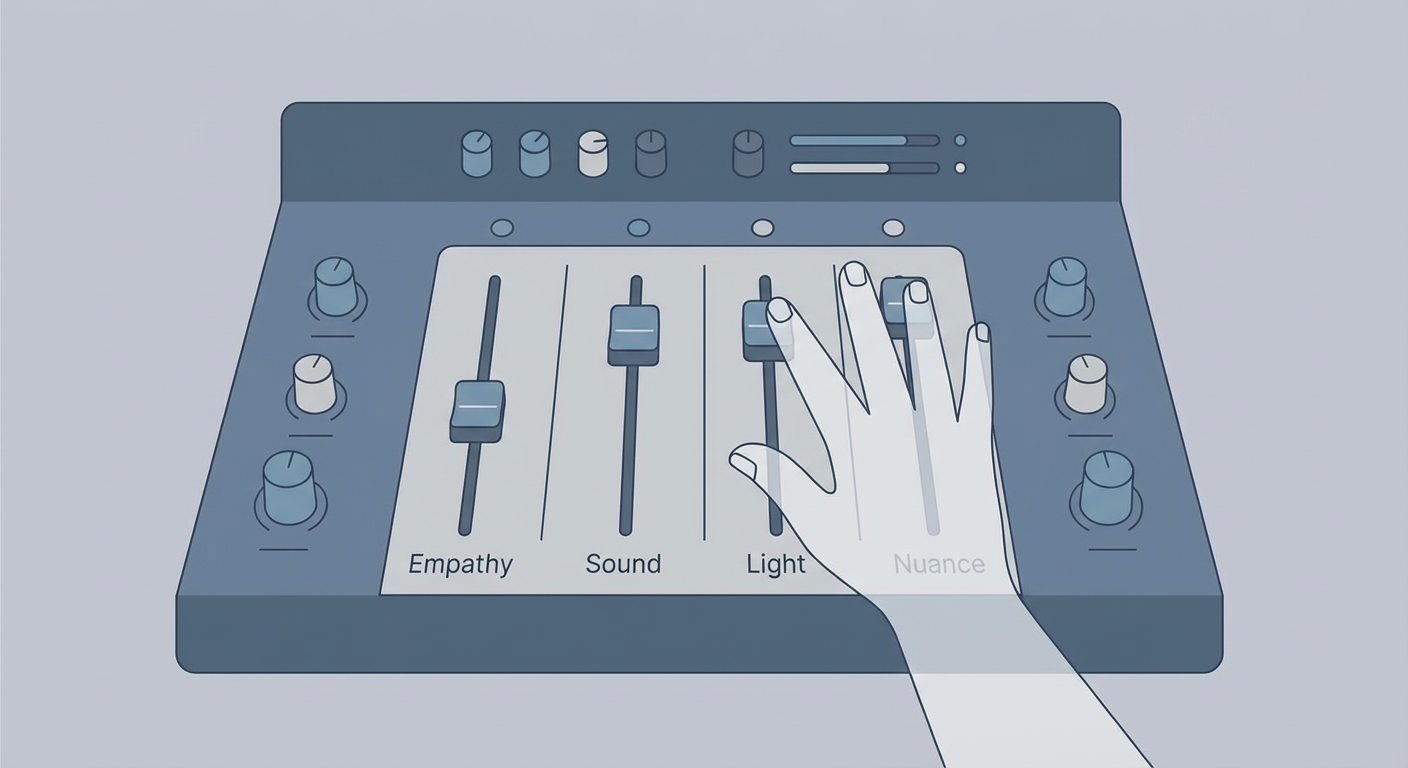
This means when they say the lights are too bright, or your tone was "sharp," they aren't making it up. Their nervous system is literally firing more neurons in response to the same stimulus. They are not being dramatic; they are being biologically accurate to their experience.
The Relational Dance: Communicating Without Wounding
The central paradox of loving an HSP (as Esther Perel might frame it) is balancing the need for authenticity with the necessity of care. How do you express your frustration without shattering their safety?
The "Pause" Protocol (Stopping the Crash)
HSPs flood easily. During a conflict, their heart rate can skyrocket, triggering a "fight or flight" response faster than yours. Once flooded, their prefrontal cortex (the logic center) goes offline. Continuing to argue at this point is futile.
The Strategy: Implement a mandatory "20-Minute Buffer."
- Detect the Flood: Watch for the glazed look, the rapid breathing, or the sudden silence.
- Call the Code: Agree on a neutral phrase beforehand. "I care about this conversation, but I’m at capacity. I need 20 minutes."
- The Promise of Return: You must state when you will come back. Abandonment is the kryptonite of the highly sensitive.
The Anatomy of a Safe Apology
If you are wondering how to apologize to a highly sensitive person, erase the phrase "I'm sorry you feel that way" from your vocabulary. To an HSP, that sounds like, "Your reality is wrong, but I'm sorry you're crazy."
Use the Validation-First Script:
- Step 1: Validate the Reality. "I can see that my tone came off as dismissive when I walked in." (Even if you didn't intend it, acknowledge that they experienced it).
- Step 2: State Intent vs. Impact. "My intent was just to get dinner started quickly, but the impact was that I shut you down."
- Step 3: Reassurance. "I am here. I am listening. Let's try that sentence again."
The Crisis Toolkit: De-escalation & Regulation
When the system crashes—when the lights are too bright, the schedule is too packed, and the emotions are too high—you need to know how to calm down a highly sensitive person.
Logic will not work here. You cannot talk someone out of a nervous system overdrive. You must use somatic (body-based) interventions.
Therapist’s Note
It is crucial to distinguish between a tantrum (manipulative, goal-oriented) and a meltdown (biological, result of overload). An HSP in meltdown is drowning. They don't need a lecture on swimming; they need a raft. When I see clients try to "reason" with a flooded partner, it’s like trying to upload a file to a computer that is already smoking. Unplug it first.
The Sensory Bunker
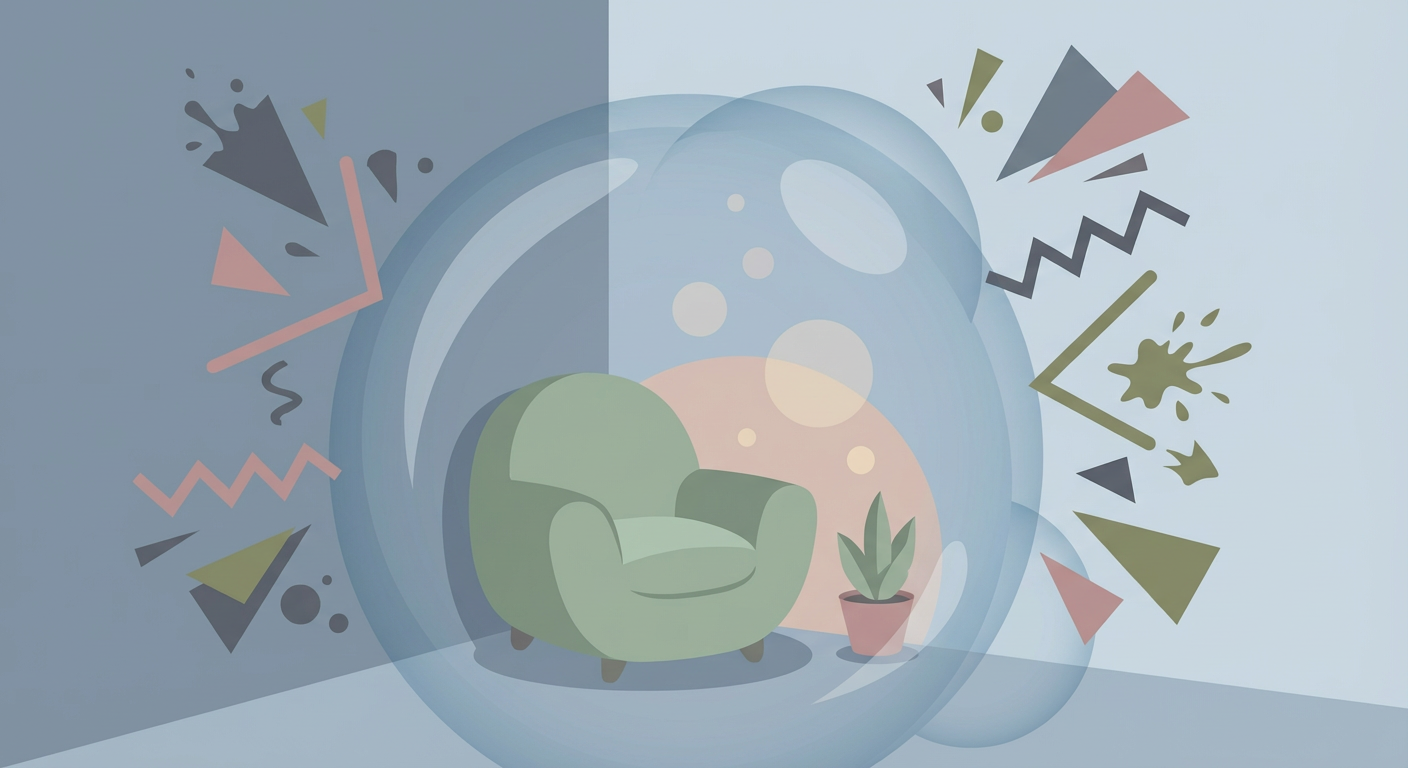
Create a protocol for "low-stimulation mode."
- Dim the Inputs: Lower the lights. Turn off the music. Suggest a heavy blanket (deep pressure therapy signals safety to the autonomic nervous system).
- Parallel Play: Sit near them, but don't force eye contact or conversation. Your calm presence acts as a "biological anchor" for their chaotic waves.
- The "Menu" Approach: In a crisis, decision fatigue is real. Don't ask, "What do you want?" Ask, "Water or Tea?" "Bedroom or Couch?" Limit the variables.
Living & Loving: The Long-Term Dynamics
Parenting the "Orchid Child"
If you are asking how to parent a highly sensitive person, realize you are raising an "Orchid Child." Dandelions can grow anywhere; orchids require specific soil and climate, but under the right conditions, they bloom with breathtaking complexity.
- No Shaming: Never say "You're too sensitive" or "Toughen up." This creates a core wound of shame.
- Preview transitions: Sudden changes are threats. Give them a 10-minute warning, then a 5-minute warning.
- Emotion Coaching: Help them label the tsunami. "It looks like you're feeling disappointed because the playdate ended." Naming the demon tames it.
The Depth of Connection
This brings us to the quiet fear many partners harbor: Can a highly sensitive person really love someone, or are they too wrapped up in their own feelings?
The truth? They love with a ferocity that can be terrifying.
Because they have "thin boundaries," they don't just sympathize with you; they often become you. When you are hurting, they physically feel it. This isn't selfishness—it’s radical empathy.
However, this intensity requires a strong container. You, the partner, must be the Anchor to their Weather Vane. They will spin with the winds of emotion; you must provide the weight that keeps the structure from flying away. This dynamic, when balanced, creates a relationship of profound emotional literacy and erotic charge.
Conclusion: The Gift of Witnessing
Living with a highly sensitive person is demanding. It asks you to be more conscious, more articulate, and more patient than the average relationship requires.
But there is a trade-off.
In a world that is increasingly numb, distracted, and superficial, the HSP offers you a doorway into the deep end. They notice the way the light hits the floor in the afternoon. They remember the specific word you used three weeks ago that made them feel loved. They force you to slow down and actually taste your life.
Therapist’s Note
I often tell my clients: Do not mistake their tears for weakness. It takes an immense amount of courage to feel everything in a world that encourages us to feel nothing. If an HSP has chosen to love you, they have entrusted you with their most vulnerable self. That is not a burden to be carried; it is a privilege to be held.
We have explored the "Hardware," the communication scripts, and the deep emotional architecture of the HSP. But knowledge is only potential power. True change happens when you apply this to your specific dynamic.