There is a specific kind of silence that falls over the therapy room when a patient finally asks the question they have been carrying for years. It isn’t usually a question about dopamine or prefrontal cortexes. It is something far more primal.
They look down at their hands, or perhaps past me out the window, and ask: "Did I break my brain, or was I built this way?"
If you are searching for what causes ADHD, you are likely looking for more than just a biological checklist. You are looking for an origin story. You are looking for absolution.
The medical definition of Attention Deficit Hyperactivity Disorder (ADHD) often feels cold—a laundry list of deficits and disorders. But to understand the true architecture of the ADHD mind, we must look beyond the symptoms and into the soil from which this unique cognitive style grows.
Therapist’s Note
I often witness a profound sense of shame attached to the "Why." Many of my patients have spent decades internalizing their struggles as moral failings—laziness, carelessness, or a lack of willpower. Let us be clear from the start: ADHD is not a behavior you chose; it is a blueprint you were given. Understanding the cause is the first step in dismantling the shame.
The Genetic Whisper: Is ADHD Genetic?
When we ask if ADHD is genetic, the short answer is a resounding yes. But that simple "yes" hides a much more poetic complexity.
Current research indicates that the heritability of ADHD is approximately 74%. To put that in perspective, this is nearly as heritable as height. It is not a random glitch in the system; it is a strong, persistent thread woven through generations.
The 74% Reality
You do not simply "catch" ADHD from the modern world. It is an ancestral inheritance. Many of the adults I work with only recognize their own neurodivergence when they sit across from a doctor describing their child’s symptoms. Suddenly, the struggles of their own childhood—the lost homework, the emotional volatility, the feeling of being a "motor driven by no one"—snap into sharp, painful focus.
This is not a defect passed down like a curse. It is a set of traits that, in a different time or context, might have been evolutionary assets. The hyper-focus required to track prey, the impulsivity needed to react to sudden danger, the restlessness that drove exploration—these are the hallmarks of the hunter in a farmer’s world.
Not a Soloist, But a Symphony
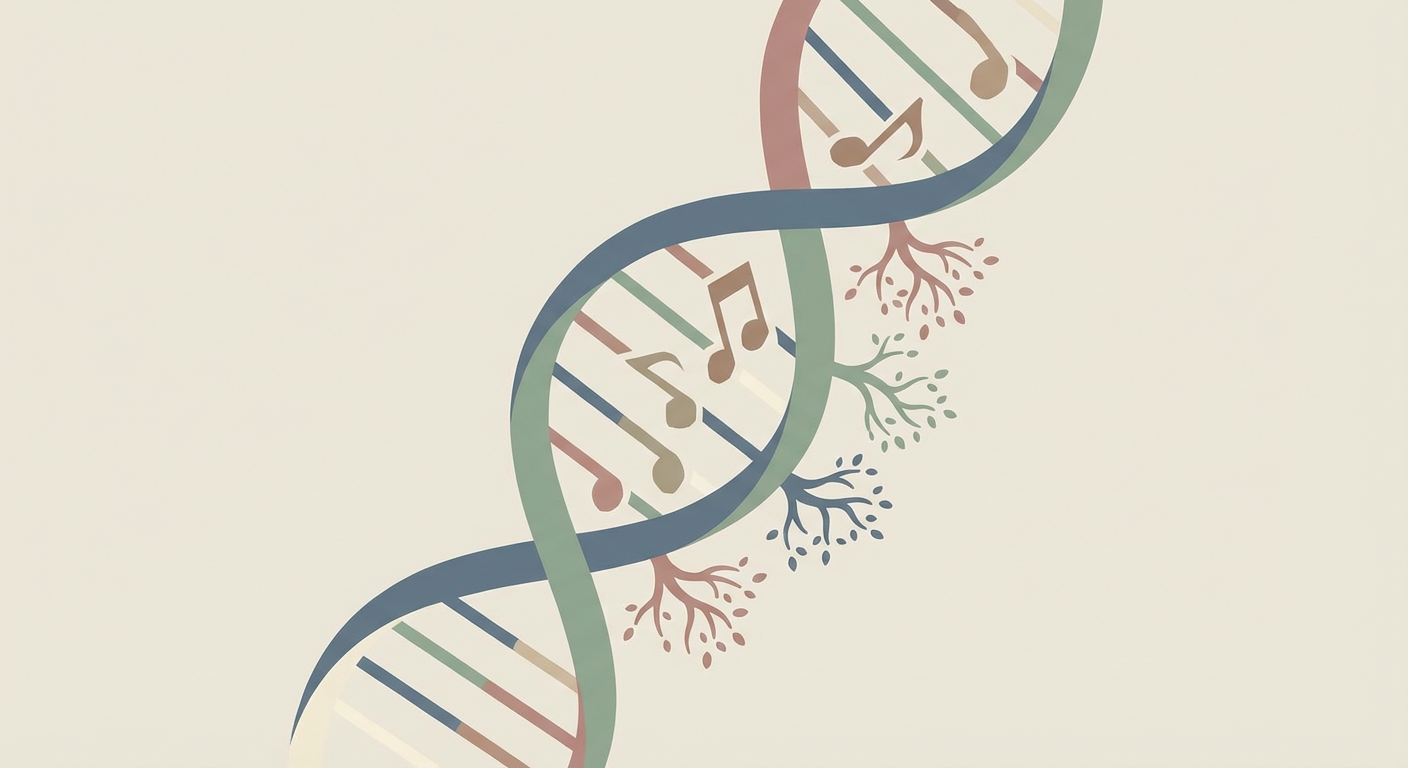
It is critical to understand that there is no single "ADHD gene." You cannot point to a specific strand of DNA and say, “There it is, that’s the culprit.”
Science tells us that ADHD is polygenic. It is the result of thousands of tiny genetic variations humming together. Think of it not as a single broken instrument, but as a symphony playing in a unique key. Each genetic variant contributes a tiny amount of risk, stacking up until they cross a threshold that we clinically label as ADHD.
The Architecture of Being: Are You Born With It?
If the blueprint is drawn before birth, the construction begins in utero. So, are you born with ADHD?
Yes. The die is cast long before you take your first breath.
Wiring Before Walking
Brain imaging studies reveal that the ADHD brain matures differently. It is not "damaged"; it is on a delayed trajectory. Key areas of the brain, particularly the prefrontal cortex—the CEO of the brain responsible for planning, impulse control, and focus—can be up to three years behind in development compared to neurotypical peers.
This delay creates a painful dissonance. You have the intelligence of an adult, but the emotional brakes of someone much younger. It creates a gap between intention and action that defines the ADHD experience. You know what to do; you simply cannot make your brain initiate the doing.
The Dopamine "Currency"
Here we must talk about desire. Esther Perel often speaks of desire as the ownership of one's wanting. For the ADHD mind, "wanting" is a chemical crisis.
The ADHD brain suffers from a chronic shortage (or inefficient transmission) of two key neurotransmitters: dopamine and norepinephrine.
- Dopamine is the brain’s reward system. It is the feeling of satisfaction after finishing a task.
- Norepinephrine is the wake-up call. It regulates attention and arousal.
In a neurotypical brain, completing a boring tax return releases enough dopamine to keep the person going. In an ADHD brain, the tank is empty. The brain is literally starved for stimulation. This is why you might find yourself doom-scrolling at 2 AM or picking a fight with a partner just to feel something. You aren't being difficult; your brain is hunting for the dopamine it needs to function.
Therapist’s Note
This chemical hunger often looks like instability to the outside world. Partners might say, "You're always looking for the next thrill." But I invite you to see it differently. It is a physiological quest for presence. You are trying to wake up a brain that constantly wants to drift into the fog. It is a survival mechanism, not a character flaw.
The Environmental Landscape (It’s Not Just DNA)
While genetics load the gun, environment pulls the trigger. This is the nuance that binary debates often miss. We are not biological robots; we are porous beings, constantly absorbing our surroundings.
Prenatal Echoes
There are biological environmental factors that can tip the scales. Exposure to toxins (like lead), alcohol or tobacco use during pregnancy, and premature birth have all been linked to higher rates of ADHD. These are biological insults to the developing nervous system.
However, we must be careful here. Parents reading this often spiral into guilt. “Did that glass of wine cause this?” The answer is almost certainly no. It is rarely one thing, but rather a cumulative interaction between a genetic predisposition and environmental stressors.
The "Modern World" Hypothesis
Let us address the elephant in the room: Screens.
Did TikTok give you ADHD? No.
Does the fragmenting, rapid-fire nature of modern digital life exacerbate ADHD symptoms? Absolutely.
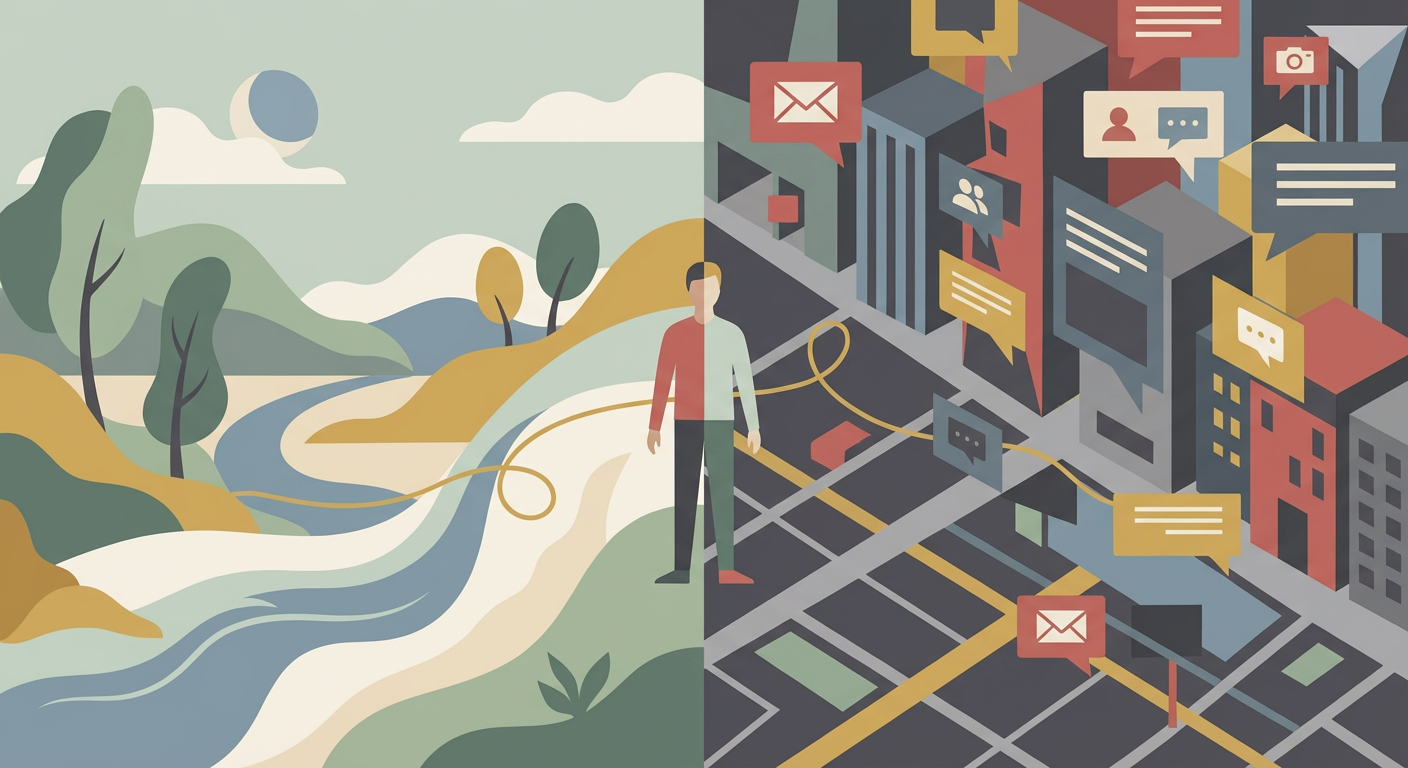
We live in an attention economy designed to exploit the very weaknesses of the ADHD mind. But this is an aggravation, not a causation. You cannot create a neurodevelopmental disorder simply by watching too much TV. You can, however, take a brain wired for distraction and place it in an environment that never stops screaming for attention. That is the crisis we face today.
From Cause to Context: Neuroplasticity
If we stop the story at "genetics," it feels like a life sentence. But the most beautiful discovery of modern neuroscience is neuroplasticity.
The Brain That Changes
Your wiring is not wet cement; it is not set forever. While you cannot change your genetics, you can physically alter the structure and function of your brain through experience, medication, and therapy.
We now know that the ADHD brain remains plastic throughout life. We can build external scaffolding—routines, systems, alarms—that eventually become internalized pathways. We are not fixing a broken machine; we are learning to operate a high-performance, high-maintenance engine.
Therapist’s Note
Acceptance is the paradox of change. As long as you are fighting your biology—wishing you were different, hating your need for structure—you remain stuck. But the moment you say, "Okay, this is how my engine runs," you can start to drive it. The goal is not to become neurotypical. The goal is to become the most functional version of yourself.
A Final Thought on "Why"
We search for causes because we want to know if we are responsible for our struggles. We want to know if we could have done it differently.
But here lies a deeper truth: The cause matters less than the context.
Knowing that your ADHD is genetic, that it is woven into the very double helix of your being, offers a permission slip. It grants you permission to stop trying to force your square-peg mind into the round hole of a standardized world. It invites you to stop asking "What is wrong with me?" and start asking "What does a mind like mine need to thrive?"
You were built this way. The design is different, yes. It is intense, restless, and often exhausting. But it is also capable of profound creativity, deep empathy, and electric vitality. The question is not how to cure it, but how to inhabit it fully.
If this resonance feels familiar—if you see your own reflection in the restless energy and the hunger for connection—you might want to explore exactly where you sit on this spectrum. Discover your unique cognitive profile in our Archetype Test